Software Is Eating the World – And Now It’s a Survival Factor
Marc Andreessen’s famous 2011 declaration that “software is eating the world” has proven prophetic. In 2025–2026, this statement has taken on new meaning: software is no longer a competitive edge – it is a survival factor. Every business, regardless of industry, runs on software. The question is no longer whether to use software, but whether you control the software or the software controls you.
Off-the-shelf software forces you to adapt your processes to someone else’s logic. You pay for features you don’t need, lack features you do need, and work around limitations that make no sense for your business. Custom web applications invert this relationship. They adapt to your processes, not the other way around. They include exactly what you need and nothing you don’t. They evolve as your business evolves.
The trends driving this shift are unmistakable. Low-code technologies will power 75% of new apps by 2026, but the most valuable applications remain those built with custom development for unique business needs. The integration of AI and machine learning is no longer a differentiator – it is table stakes. By 2026, AI summarization, smart assistants, and predictive analytics are expected features, not competitive advantages. A custom web application is not an expense. It is a strategic asset that gives you capabilities your competitors cannot copy.
The Strategic Advantage of Owning Your Software
When you license off-the-shelf software, you are renting someone else’s solution. The vendor controls the roadmap, the pricing, the features, and the data. If the vendor decides to discontinue a feature you rely on, you have no recourse. If they raise prices, you either pay or endure a painful migration. If they go out of business or get acquired, your operations are at risk.
Custom web applications invert this power dynamic. You own the code, the database, the user interface, and the intellectual property. The roadmap is determined by your business priorities, not a vendor’s shareholder pressures. Features are added when you need them, not when a product manager decides they’re profitable. Data remains under your control, on your infrastructure, subject to your security policies.
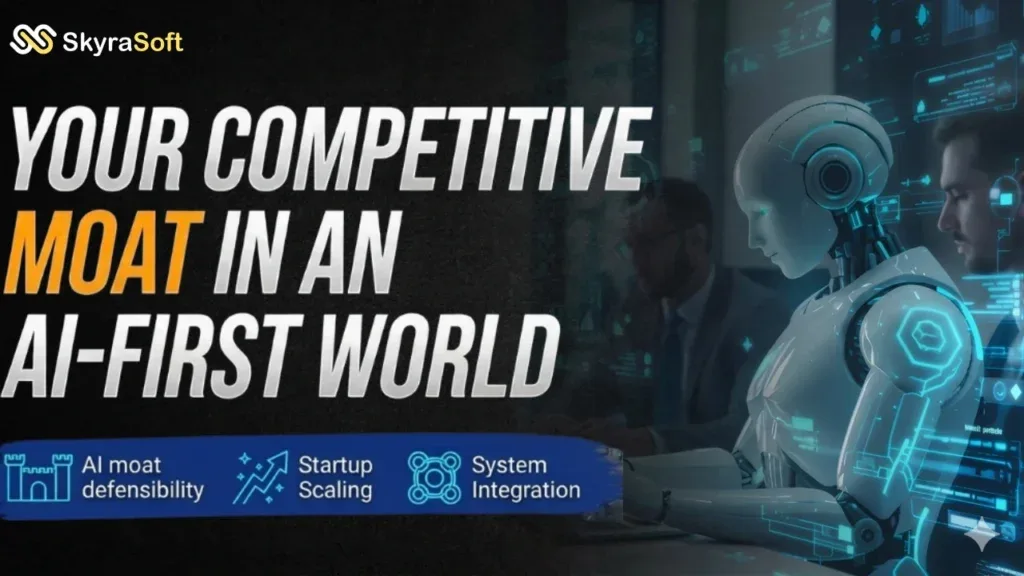
This ownership creates a competitive moat. A competitor can license the same off-the-shelf software you use. They cannot license your custom application. The workflows you have optimized, the integrations you have built, the user experience you have refined – these are unique to your business. They represent accumulated knowledge and capability that cannot be purchased.
For businesses with proprietary processes, trade secrets, or regulatory compliance requirements, custom development is not just advantageous – it is necessary. Off-the-shelf software cannot protect intellectual property that must remain within your control. It cannot adapt to compliance frameworks that change faster than vendor release cycles. Only custom software provides the precision and control that regulated industries require.
AI Integration – From Differentiator to Expectation
The conversation around AI in web applications has shifted dramatically. Two years ago, adding AI capabilities was a competitive differentiator. Today, it is an expectation. Customers and employees alike expect software to be smart – to anticipate needs, automate routine tasks, and provide insights rather than just data.
Custom web applications enable AI integration that is tailored to your specific business context. A generic CRM might offer basic lead scoring. A custom CRM can incorporate your unique sales methodology, historical win/loss patterns, and industry-specific signals to predict which leads will close and which won’t. A generic inventory system might offer reorder alerts. A custom system can integrate with supplier lead times, seasonal demand patterns, and logistics constraints to optimize stock levels automatically.
The most valuable AI integrations are invisible. Users don’t interact with a “chatbot” or “AI assistant” – they simply experience software that works better. Forms auto-populate with predicted values. Reports highlight anomalies without being asked. Workflows route tasks intelligently based on context. This ambient intelligence is only possible when the AI is deeply integrated with business logic, not bolted on as an afterthought.
Building AI into custom applications requires expertise in machine learning, data engineering, and product design. But the cost of this expertise has fallen dramatically. Pre-trained models, APIs from OpenAI and Anthropic, and open-source libraries make AI integration accessible to custom development teams. The barrier is no longer technology – it is the strategic clarity to identify where AI creates real value for your specific business.
The Economics of Custom vs. Off-the-Shelf
The upfront cost of custom development is higher than licensing off-the-shelf software. This is the argument that vendors use to steer businesses away from custom solutions. But upfront cost is the wrong metric. Total cost of ownership over three to five years tells a different story.
Off-the-shelf software costs include licensing fees (often escalating annually), implementation costs (which can rival custom development for complex configurations), integration costs (connecting to your existing systems), customization costs (when you pay consultants to work around platform limitations), and migration costs (when you eventually outgrow the platform). These costs are distributed, recurring, and often hidden.
Custom software costs include initial development, hosting, and ongoing maintenance. That’s it. No licensing fees. No per-user pricing. No surprise price increases. The predictable cost structure allows accurate budgeting and eliminates the risk of vendor-driven cost inflation.
The break-even point varies by business size and requirements. For a small business with simple needs, off-the-shelf software may never be worth replacing. For a mid-market business with unique processes, the break-even often occurs within 12-24 months. For an enterprise with complex requirements, custom development is cheaper from day one because the configuration and customization costs of off-the-shelf solutions exceed custom build costs.
Beyond direct costs, custom software generates value that off-the-shelf cannot. Process efficiencies that save employee time. Data insights that drive better decisions. Integration that eliminates manual data entry and the errors it causes. Competitive advantages that increase revenue. These benefits are difficult to quantify but often dwarf the direct cost difference.
When to Build Custom – A Decision Framework
Not every business need justifies custom development. The decision requires evaluating four factors: uniqueness, strategic importance, scale, and change frequency.
Uniqueness: Is your process genuinely different from industry standard? If you do things the same way as everyone else, off-the-shelf software probably works. If your process is a competitive advantage – something that makes you better, faster, or cheaper – then custom software protects that advantage.
Strategic importance: Does the software enable core business operations or peripheral ones? Custom development for payroll processing is rarely justified. Custom development for your proprietary order management system that differentiates you from competitors may be essential.
Scale: How many users and transactions will the system handle? Custom development has high fixed costs but low marginal costs. For small-scale needs, off-the-shelf is often cheaper. For large-scale needs, custom becomes more economical.
Change frequency: How often do your processes change? Off-the-shelf software forces you to adapt to its release schedule. Custom software adapts on your schedule. If your business evolves rapidly, the flexibility of custom development is invaluable.
The businesses that succeed with custom web applications treat them as strategic assets, not one-time projects. They budget for continuous improvement. They maintain internal or trusted external development capacity. They measure ROI in terms of competitive advantage, not just cost savings. In an AI-first world where software capabilities increasingly determine business outcomes, custom web applications are not a luxury – they are a moat.