
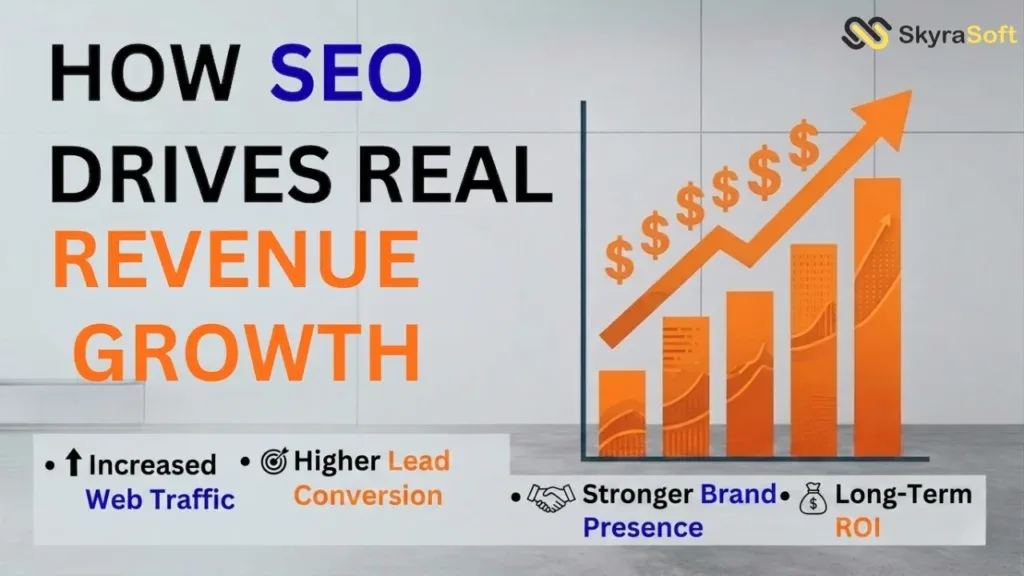
The Trust Advantage—Converting Before the Transaction
The most valuable asset SEO creates is not traffic or rankings. It is trust. And trust is the single most powerful conversion driver in existence.
Consider how trust operates in the customer journey. A potential buyer searches for “how to fix a leaky faucet.” They find a detailed guide from a plumbing supply company. The guide is clear, accurate, and helpful. The buyer follows it and successfully fixes their leak. Six months later, that same buyer needs a new faucet. Which brand will they search for? Which brand will they trust? The plumbing supply company that helped them for free has earned a customer for life.
This dynamic plays out across every industry. A software buyer searches for “how to calculate customer lifetime value” and finds a spreadsheet template from a CRM company. A home buyer searches for “what to look for during a home inspection” and finds a checklist from a real estate agency. A parent searches for “signs of dehydration in toddlers” and finds a guide from a pediatric practice. In each case, the business that provided genuine help without asking for anything in return has earned trust that converts later.
Trust-based conversion operates differently than transaction-based conversion. When a customer arrives via a paid ad, they know they’re being sold to. Their guard is up. They’re comparing prices, reading reviews, looking for reasons not to buy. When a customer arrives via an organic search result that answered their question, they arrive grateful. Their guard is down. They already have evidence that you know what you’re talking about. The sale becomes a natural next step rather than a hard pitch.
Measuring trust is difficult, but its effects are visible in conversion data. Organic visitors typically convert at higher rates than paid visitors for the same product or service. They have higher average order values. They have lower return rates. They leave better reviews. They become brand advocates. SEO does not just drive traffic; it drives better traffic—traffic that arrives predisposed to buy.
Content Marketing as the Engine of Revenue SEO
Content marketing and SEO are often discussed as separate disciplines, but in practice they are inseparable. SEO brings people to content; content gives people a reason to stay, engage, and convert. Without content, SEO has nothing to optimize. Without SEO, content has no audience.
The most effective content for revenue SEO serves specific stages of the buyer’s journey. Top-of-funnel content addresses informational queries from people who are not yet in market for a solution. This content educates, answers questions, and builds awareness. It rarely converts directly, but it establishes trust and captures email addresses for nurturing.
Middle-of-funnel content addresses comparison and consideration queries. “Best CRM for small business,” “Shopify vs WooCommerce,” “HubSpot pricing review”—these searches come from people who know they have a problem and are evaluating solutions. This content should compare options honestly, highlight differentiators, and guide buyers toward informed decisions.
Bottom-of-funnel content addresses commercial intent queries. “Buy,” “discount,” “pricing,” “demo”—these searches come from people ready to transact. This content removes friction, answers final objections, and makes it easy to complete the purchase or request a quote.
The most sophisticated SEO programs map content to all three stages and measure performance at each. They know which top-of-funnel content generates the most newsletter signups. They know which middle-of-funnel content drives the most demo requests. They know which bottom-of-funnel content has the highest conversion rate. And they optimize continuously based on this data.
Content formats matter as much as topics. Blog posts remain the workhorse of content SEO, but video content is increasingly important. YouTube is the second-largest search engine, and video results appear in Google’s main search results. Podcasts, infographics, case studies, whitepapers, templates, and tools all attract different audiences and serve different needs. The best content strategies use multiple formats to reach customers wherever they prefer to consume information.
The Revenue Impact of Featured Snippets and Position Zero
Ranking first in organic search results is valuable. Ranking in the featured snippet—position zero, above the first organic result—is transformational. Featured snippets appear for approximately 12% of search queries and capture a disproportionate share of clicks.
A featured snippet displays a direct answer to the user’s question within the search results. For informational queries, the snippet often eliminates the need to click through at all. For transactional queries, the snippet includes pricing, availability, or reviews that influence purchase decisions. For local queries, the snippet includes maps, hours, and contact information.
The revenue impact of featured snippets comes from credibility and visibility. Being chosen by Google as the authoritative answer to a question signals trust to potential customers. Even when users don’t click through, they see your brand name associated with the answer. That brand recall influences future searches and future purchases.
Optimizing for featured snippets requires a different approach than optimizing for traditional rankings. Snippets favor clear, concise answers formatted as lists, tables, or short paragraphs. Question-and-answer formats perform well. Structured data markup helps Google understand which content answers which questions. Analyzing existing snippets for target queries reveals the formats Google prefers.
The businesses winning featured snippets in competitive niches treat them as a strategic priority rather than a happy accident. They dedicate editorial resources to creating snippet-optimized content. They monitor snippet ownership and defend it when competitors encroach. They expand from winning one snippet to winning snippets for entire topic clusters. The cumulative effect is dominating the search results page for every query related to their expertise.
Technical SEO’s Role in Revenue Protection
While content SEO drives revenue growth, technical SEO protects revenue by ensuring that search engines can find, crawl, index, and rank your content. Technical problems can render the best content invisible, eliminating revenue potential entirely.
Site architecture determines how authority flows through your domain. A flat architecture—where any page is reachable within a few clicks from the homepage—distributes authority evenly. A deep architecture—where important pages require many clicks to reach—starves those pages of authority. Internal linking strategies, breadcrumb navigation, and sitemaps all influence architecture.
Crawlability and indexation determine whether search engines can access your pages. Robots.txt files, meta robots tags, canonical tags, and noindex directives all control which pages enter the index. Misconfigured directives can accidentally exclude important pages or include low-value pages that dilute authority.
Page experience signals—Core Web Vitals, mobile-friendliness, HTTPS, and intrusive interstitial avoidance—directly impact rankings. Google has stated that page experience is a ranking factor, and the evidence supports this. Pages that load quickly, respond to interaction immediately, and display stably as they load rank higher than pages that don’t.
Structured data markup helps search engines understand your content’s meaning and relationships. Product schema enables rich results with pricing and availability. Review schema displays star ratings in search results. FAQ schema creates expandable question-answer sections. Event schema shows dates and locations. Each type of structured data can increase click-through rates and drive more qualified traffic.
Technical SEO is not glamorous, but its revenue impact is substantial. A site that cannot be crawled cannot rank. A site that ranks but has poor page experience will lose visitors to faster competitors. A site with broken structured data misses opportunities for rich results. Technical excellence is the foundation upon which content SEO and revenue growth are built.
Measuring SEO’s Revenue Contribution
The final piece of revenue-driven SEO is measurement. If you cannot measure SEO’s contribution to revenue, you cannot optimize it, defend its budget, or celebrate its wins. Yet many businesses measure SEO only in vanity metrics: rankings, traffic, backlinks. These metrics correlate with revenue but do not measure it directly.
Revenue attribution for SEO requires connecting organic traffic to conversions. In e-commerce, this is relatively straightforward: track which organic landing pages generate purchases and at what average order value. In B2B, attribution is more complex because the customer journey is longer and involves multiple touchpoints. Multi-touch attribution models assign partial credit to each touchpoint, revealing the full value of SEO content that assists conversions without capturing the final click.
Google Analytics 4 enables several attribution models, including last-click (credits the final touchpoint), first-click (credits the first touchpoint), linear (credits all touchpoints equally), and data-driven (uses machine learning to assign credit based on actual influence). For most businesses, a position-based model that gives more credit to first and last touchpoints with partial credit to intermediates best captures SEO’s value.
Beyond direct conversions, SEO contributes to revenue through brand search lift. When more people know your brand, more people search for it directly. Branded search traffic converts at the highest rates because these visitors already know and trust you. Correlating SEO content publication with increases in branded search volume reveals this indirect revenue contribution.
Customer lifetime value further amplifies SEO’s revenue impact. Customers acquired through organic search typically have higher lifetime value than those acquired through paid channels because they arrived with trust already established. Calculating LTV by acquisition channel and applying it to SEO-acquired customers provides a more complete picture of revenue contribution than first-purchase conversion alone.
SEO is not about rankings. It is about revenue. The businesses that understand this distinction invest differently, measure differently, and achieve different results. They build content that serves customers. They earn trust before asking for the sale. They create assets that generate revenue for years. And they capture the revenue growth that competitors chasing short-term tactics leave on the table.